

Laser vs Traditional Welding Methods Which is Best for Your Project
- Chris

- 4 hours ago
- 3 min read
Welding technology has evolved significantly, offering various methods to suit different materials and project needs. Among these, laser welding and traditional welding methods like Tig and Mig welding stand out. Choosing the right technique can impact the quality, efficiency, and cost of your work. This post compares laser welding with traditional methods, focusing on their strengths and limitations, especially for those working with sheet metal.
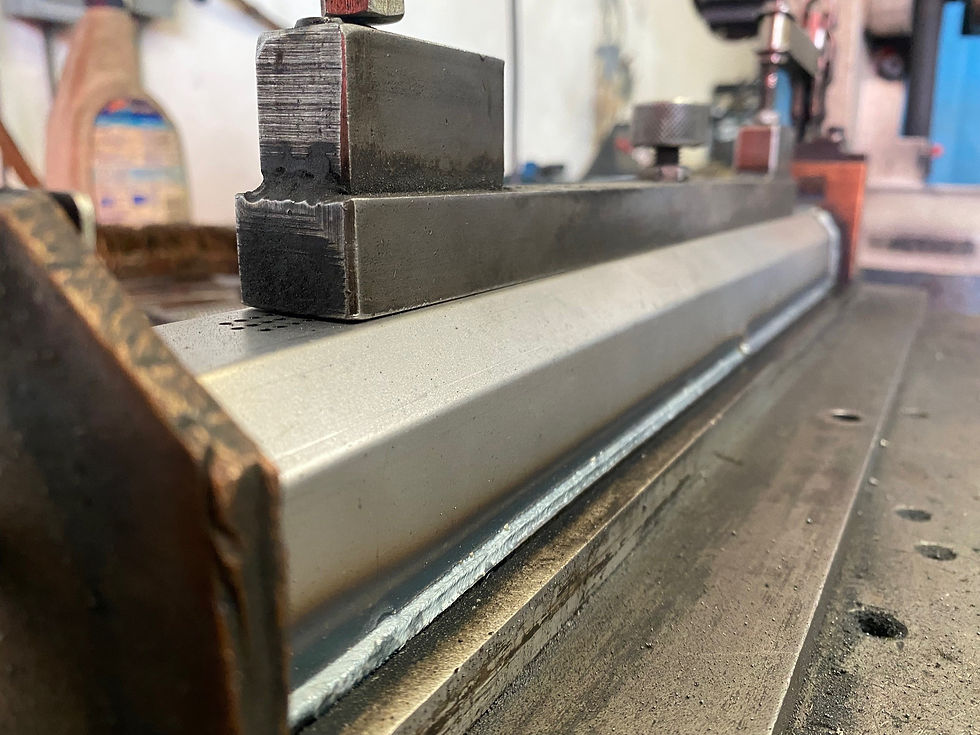
Understanding Laser Welding
Laser welding uses a concentrated beam of light to join materials. It excels at working with very thin sheet metal, offering precise, clean welds with minimal heat distortion. This makes it ideal for delicate parts where maintaining the integrity of the material is critical.
Some laser welders come with additional features, such as laser rust or oxide removal. This can save time by cleaning the surface before welding, improving weld quality without extra preparation steps.
Despite these advantages, laser welding has limits. It works best on thinner materials and struggles with thicker metals. The process offers less control compared to Tig welding, where welders can manipulate the arc and filler material to shape the weld bead. Laser welding is more automated and less flexible in this regard.
Traditional Welding Methods: Tig and Mig Welding
Tig welding uses a tungsten electrode to produce a precise, controlled weld. It allows welders to add filler material manually, making it highly versatile for different metals and thicknesses. Tig welding is excellent for projects requiring strong, clean welds with detailed control, such as custom fabrication or repair work.
Mig welding uses a continuously fed wire electrode and shielding gas. It is faster and easier to learn than Tig welding, making it popular for production environments. Mig welding handles thicker materials better than laser welding and is effective for general-purpose welding on sheet metal and structural components.
Both Tig and Mig welding remain essential in many shops because of their adaptability and control. They can handle a wider range of materials and thicknesses than laser welding.
Comparing Laser Welding and Traditional Methods

Practical Use in a Welding Shop
Where diverse industries require different welding solutions, having multiple welding methods is common. For example, our shop in Southern California added a laser welder to handle thin sheet metal parts and oxide removal tasks. This addition can improve efficiency for specific jobs but does not replace Tig or Mig welding.
Tig welding remains the go-to for projects needing detailed weld control, such as custom automotive parts or aerospace components. Tig also helps with welding repairs should issues arise and is used in some of our lathe welders. Mig welding suits production runs best and remains our most reliable method for our contract welding services.
Laser welding shines in applications where precision and minimal heat distortion are critical. For instance, in electronics or thin metal enclosures, laser welding can produce clean, strong joints without warping the material.
Choosing the Right Welding Method for Your Project
When deciding between laser welding and traditional methods, consider these factors:
Material Thickness: Use laser welding for thin sheet metal and delicate parts. For thicker materials, Tig or Mig welding is better.
Weld Control: If you need to shape the weld bead or add filler manually, Tig welding offers the best control.
Project Speed: Laser and Mig welding provide faster welds, but laser is limited to thin materials.
Additional Features: Laser welding’s oxide removal can reduce prep time.
Skill Level: Laser welding is easier to learn but less flexible. Tig welding requires more skill but offers greater versatility.
Budget and Equipment: Investing in multiple welders can cover all needs, but if you can only have one, Tig or Mig welding is more practical.

Final Thoughts
Laser welding is a valuable tool for specific tasks, especially thin sheet metal and oxide removal. It offers speed and precision but cannot fully replace traditional methods like Tig and Mig welding. These traditional methods provide greater control, versatility, and the ability to work with a wider range of materials.
For welders and shop managers, the best approach is to understand the strengths of each method and apply them accordingly. Adding a laser welder to your fleet can improve efficiency for certain jobs, but Tig and Mig welding remain essential for most projects.
Comments